
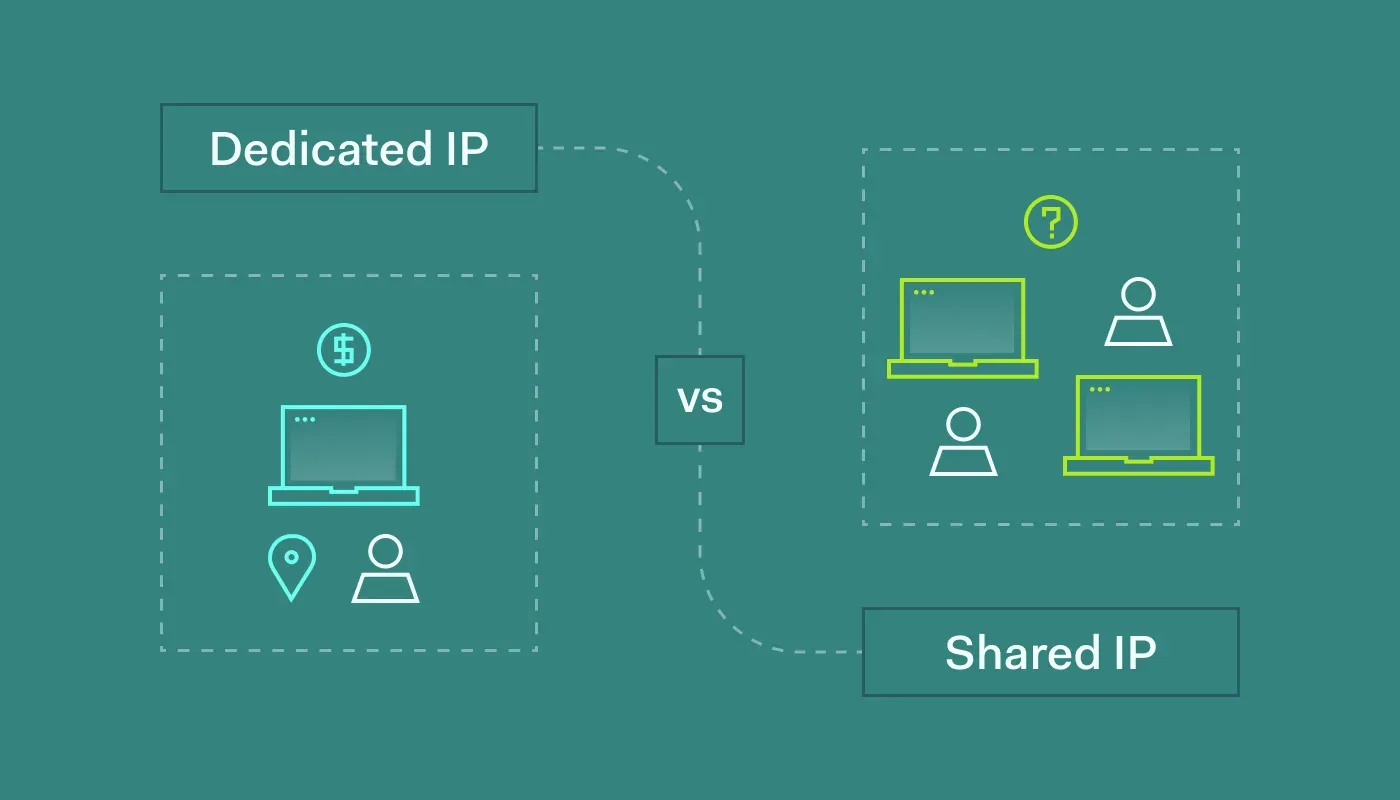
When you log into your bank, using a dedicated IP for online banking can make a big difference in security and reliability. It gives your account a stable digital fingerprint that banks trust.
TL;DR
- Dedicated IP provides a consistent address, reducing fraud alerts.
- Shared IPs are pooled; sudden spikes can trigger security blocks.
- VPNs with dedicated IPs encrypt traffic and hide your true location.
- For frequent travelers, a static IP minimizes login interruptions.
Why IP Choice Impacts Your Banking Experience
Banking platforms monitor the IP address from which you access your account. If the address changes frequently, the system may flag the activity as risky. A static, dedicated address removes that uncertainty. And a shared address can be associated with other users' suspicious behavior, which can cause your own login to be blocked.
Dedicated IP for Online Banking: Why It Matters
Think of a dedicated IP as your personal driveway. Only you park there, so neighbors never mistake your car for someone else’s. Banks see the same address every time you connect, which builds trust. This trust translates into fewer one-time passwords, fewer account freezes, and smoother transactions.
Top 5 Reasons to Choose a Dedicated IP for Online Banking
When a VPN service assigns you a static address, that address becomes the sole point of contact for every encrypted tunnel you open. Unlike a dynamic IP that can change each time your home router reconnects to the ISP, a dedicated IP stays the same until you or the provider deliberately switches it. This continuity means that the bank’s risk engine sees a single, unchanging source rather than a series of disparate endpoints, which dramatically lowers the chance of its anomaly‑detection algorithms flagging your session as suspicious. In practice, the VPN’s gateway holds the public address while your device communicates through the encrypted tunnel, so the bank never sees the underlying home network or public Wi‑Fi you might be using. The result is a “digital fingerprint” that is both stable and isolated from the noisy traffic of other users, giving you the same level of protection you would have on a corporate network without the need for a physical office connection.
References
- IP address -- Provides definition and technical background of IP addresses
- Federal Trade Commission: Protecting Your Personal Information -- Official guidance on online security best practices for consumers
- How VPNs Keep Your Banking Data Safe -- Explains VPN technology and its role in financial security



No comments yet. Be the first to share your thoughts!
Leave a Comment